




IBSSC 2026 Concludes at ACEM: Global Business School Deans Chart the Future of Business Education 2026-10-26
On October 21–23, the 11th International Business School Shanghai Conference (IBSSC) was held at the Xuhui campus of Shanghai Jiao Tong University (SJTU), coinciding with the University's 130th anniversary. Hosted by Antai College of Economics and Management (ACEM), SJTU, the conference brought together over 200 business school deans, scholars and industry leaders from more than 30 countries and regions under the theme "The Changing Role of Business Education."
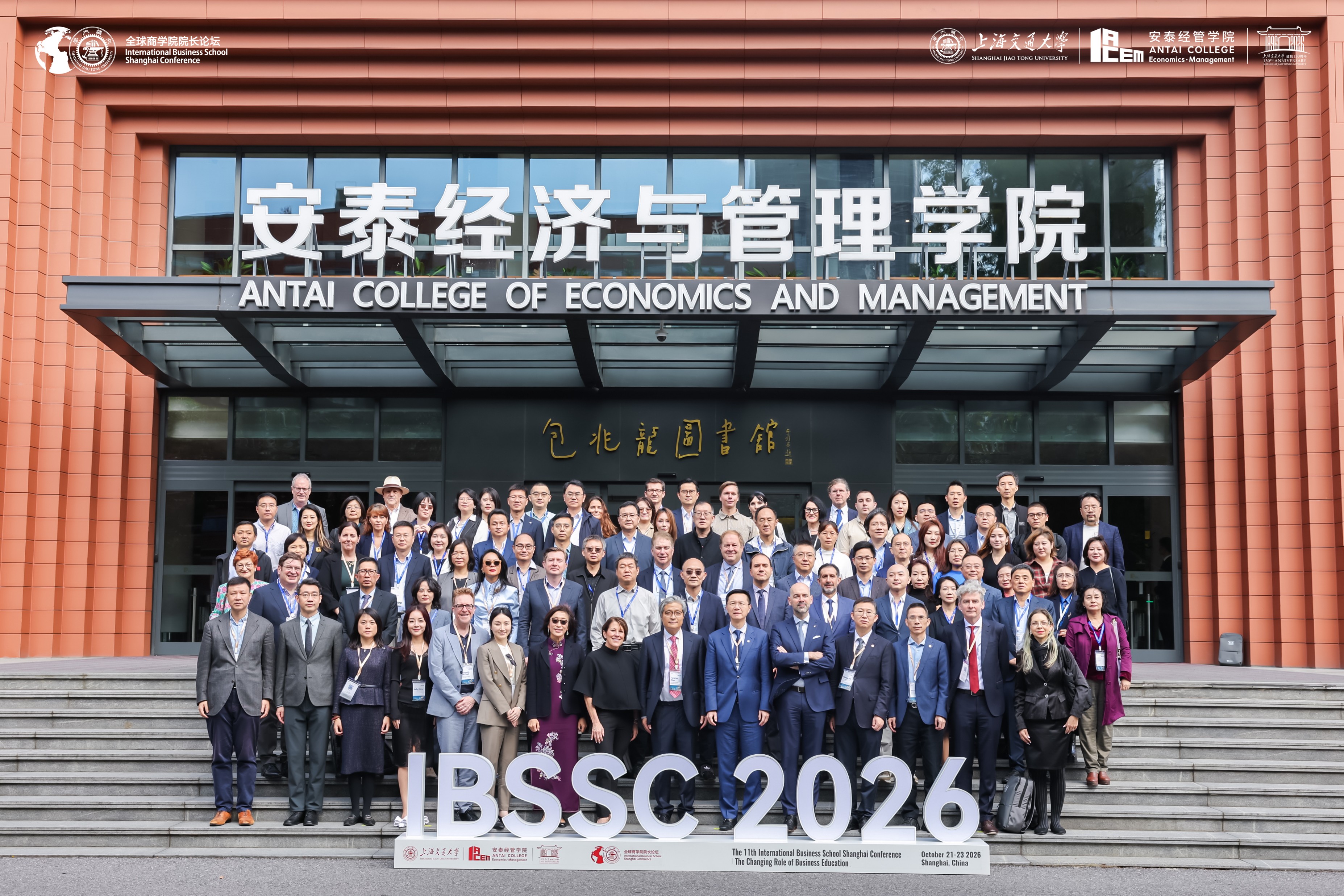 Since its launch in 2006, the biennial forum has engaged nearly 700 business schools across 88 countries and regions, welcoming more than 3,000 participants and establishing itself as one of the world's most influential platforms for business education exchange.
Opening Ceremony: Converging Global Wisdom
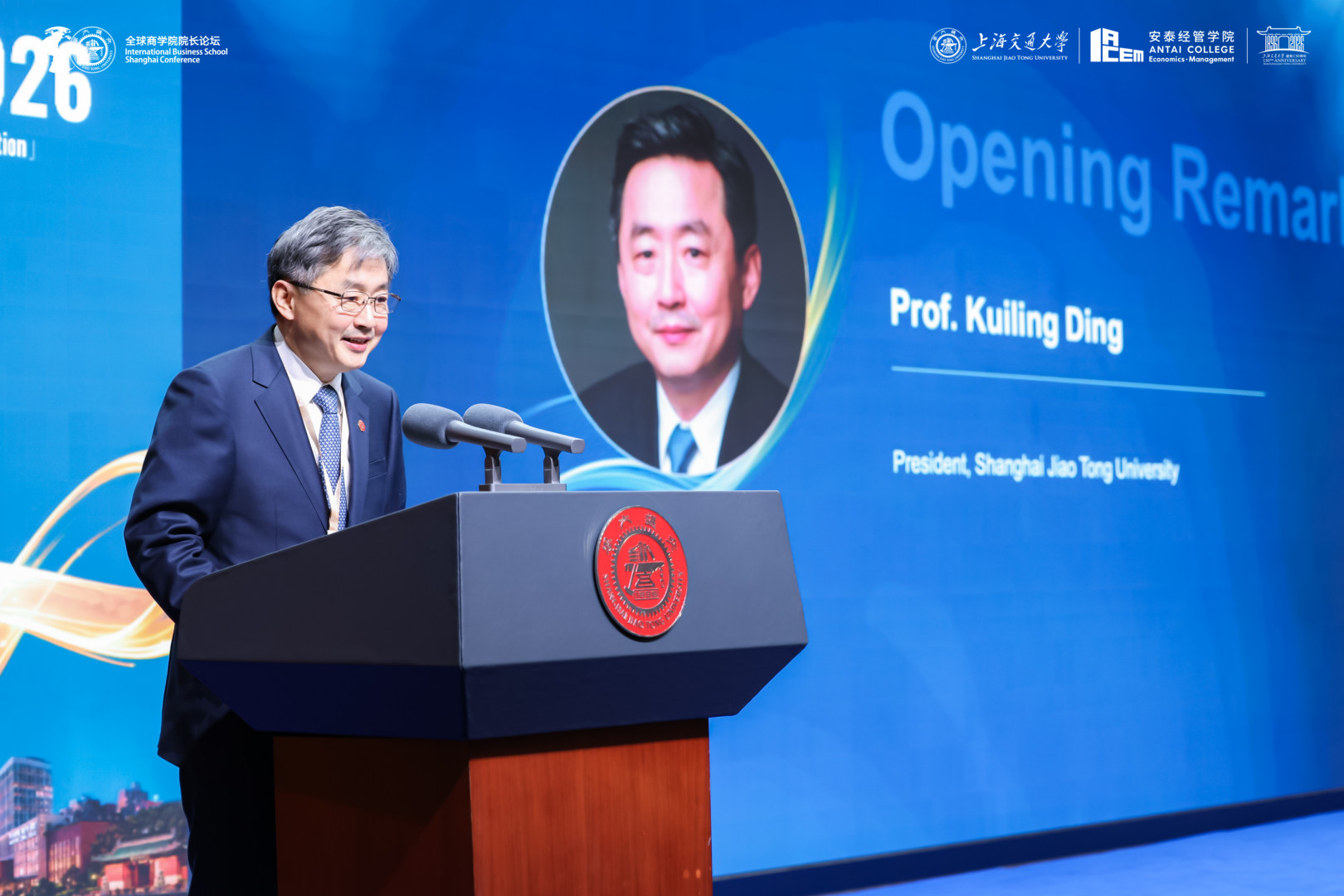 At the opening ceremony, Prof. Kuiling Ding, President of Shanghai Jiao Tong University, delivered the opening address. Noting that the world is undergoing profound transformation and that the rapid rise of artificial intelligence is reshaping industrial logic with transformative implications for business education, he said the forum has, over two decades, continuously promoted the exchange of Eastern and Western management thought and the co-construction, sharing and governance of international business schools. On the occasion of the University's 130th anniversary, he reaffirmed SJTU's founding mission of cultivating talent in service of the nation, and expressed his expectation that global business schools would deepen practical cooperation, jointly build a community for the development of business education, and explore new pathways for nurturing future-ready business talent, contributing to the innovative development of global management education.
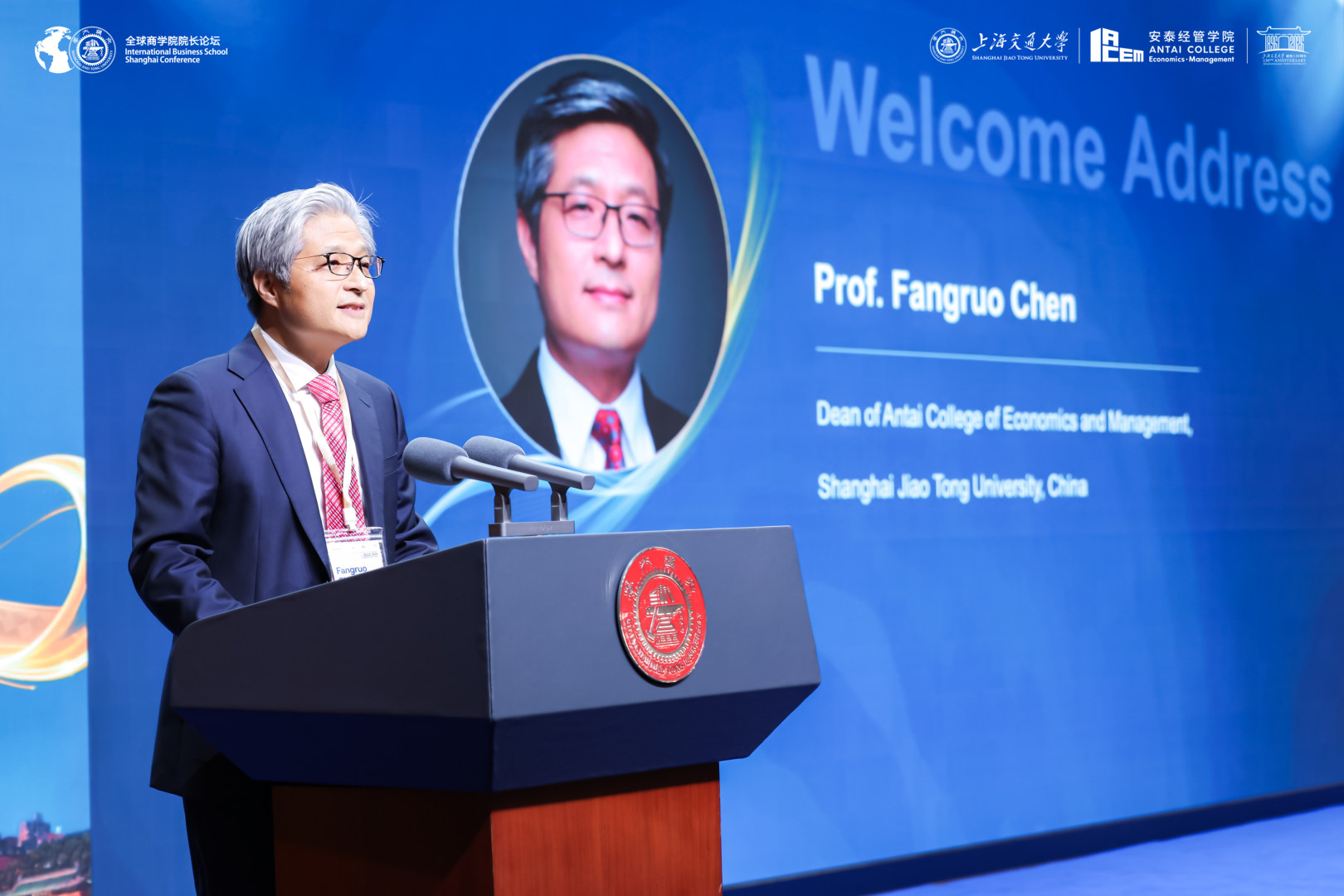 Prof. Fangruo Chen, Dean of Antai College, delivered the welcome remarks. He noted that rapid technological iteration, evolving geopolitical landscapes and rising societal expectations are reshaping the underlying logic of business education, calling on business schools to proactively become drivers of change and respond to the new questions the era poses to business education. He elaborated on Antai's strategy of "cross-disciplinary integration" and "unity of knowledge and practice," and the College's connectivity with industry, technology and the world. He said the forum is dedicated to building a platform for dialogue and collaboration among global business school leaders, and expressed his hope that participants would exchange ideas, spark insights and discover long-term cooperation opportunities, while reflecting together on the mission of business schools in a changing world. He extended sincere gratitude to all partners and sponsors.
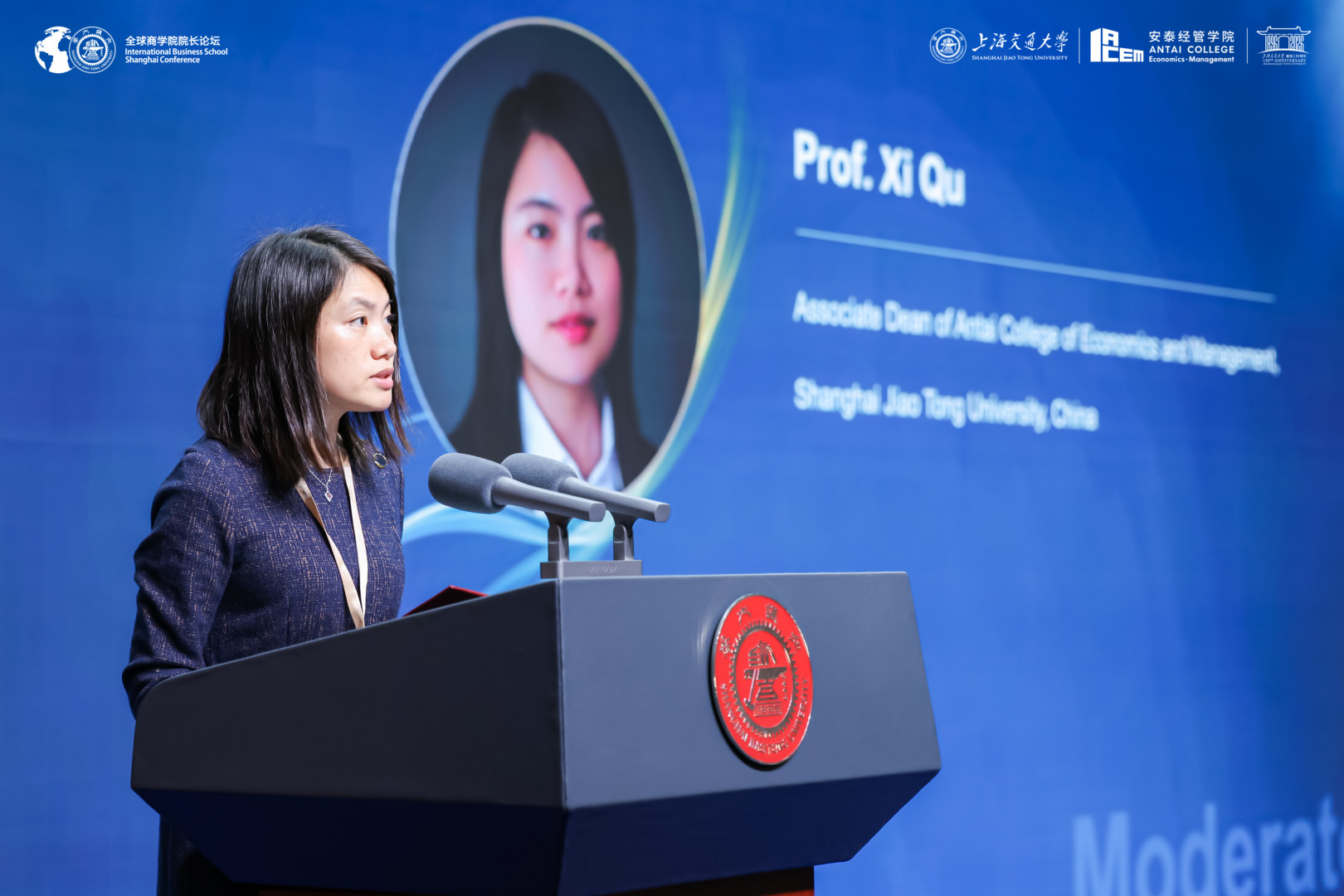 The opening ceremony was moderated by Prof. Xi Qu, Vice Dean of Antai College.
Keynote Addresses: Diverse Perspectives, Shared Convictions
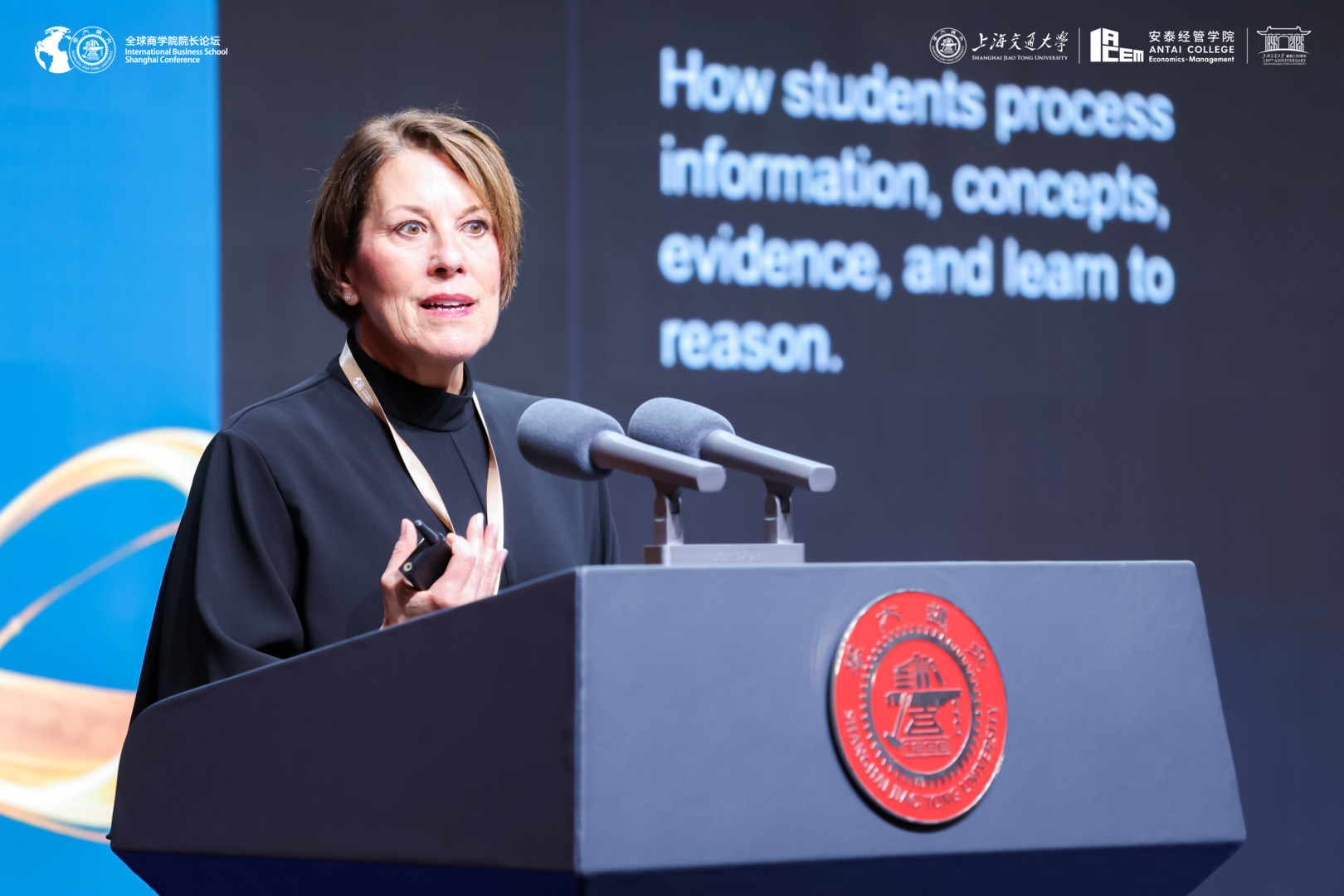
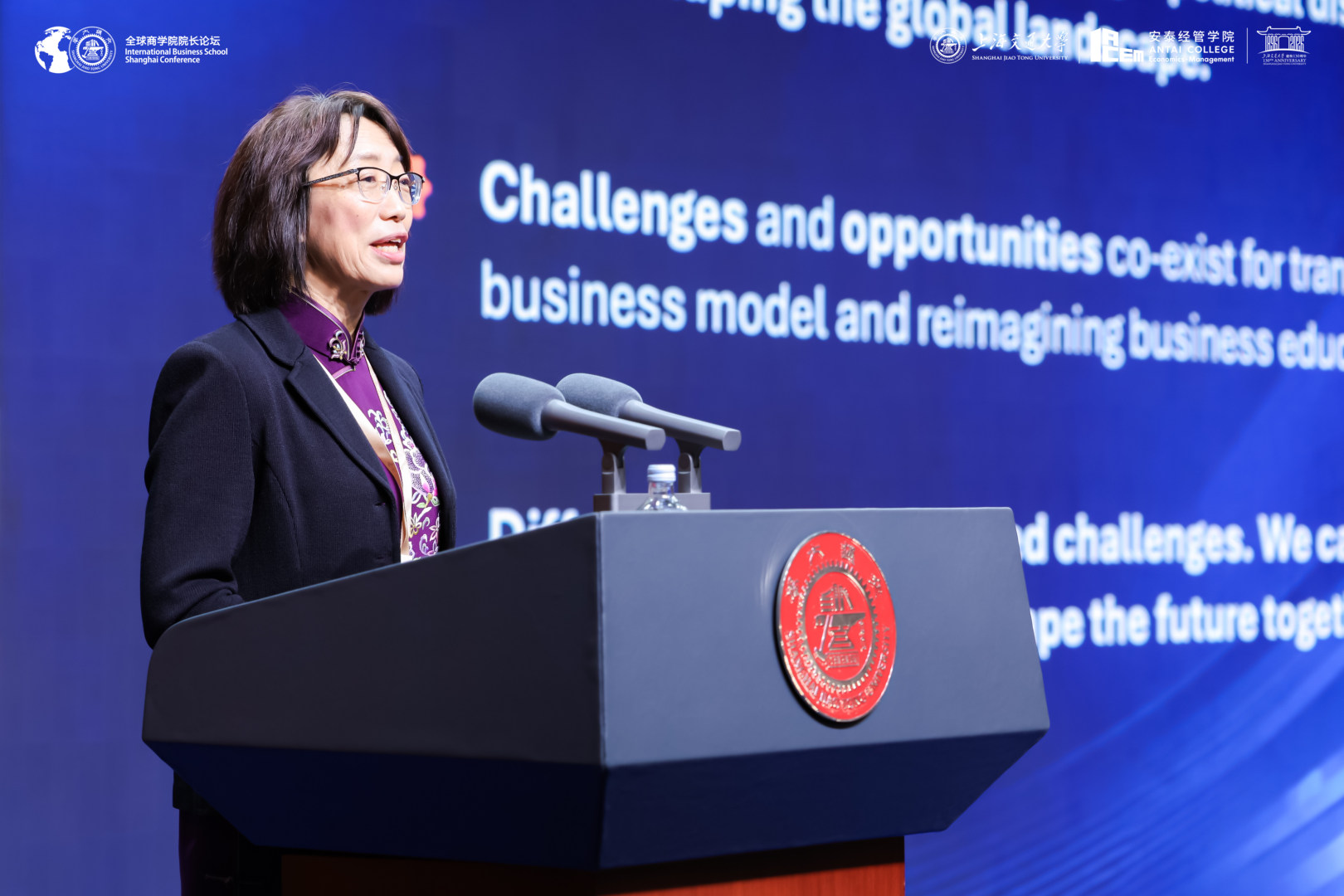
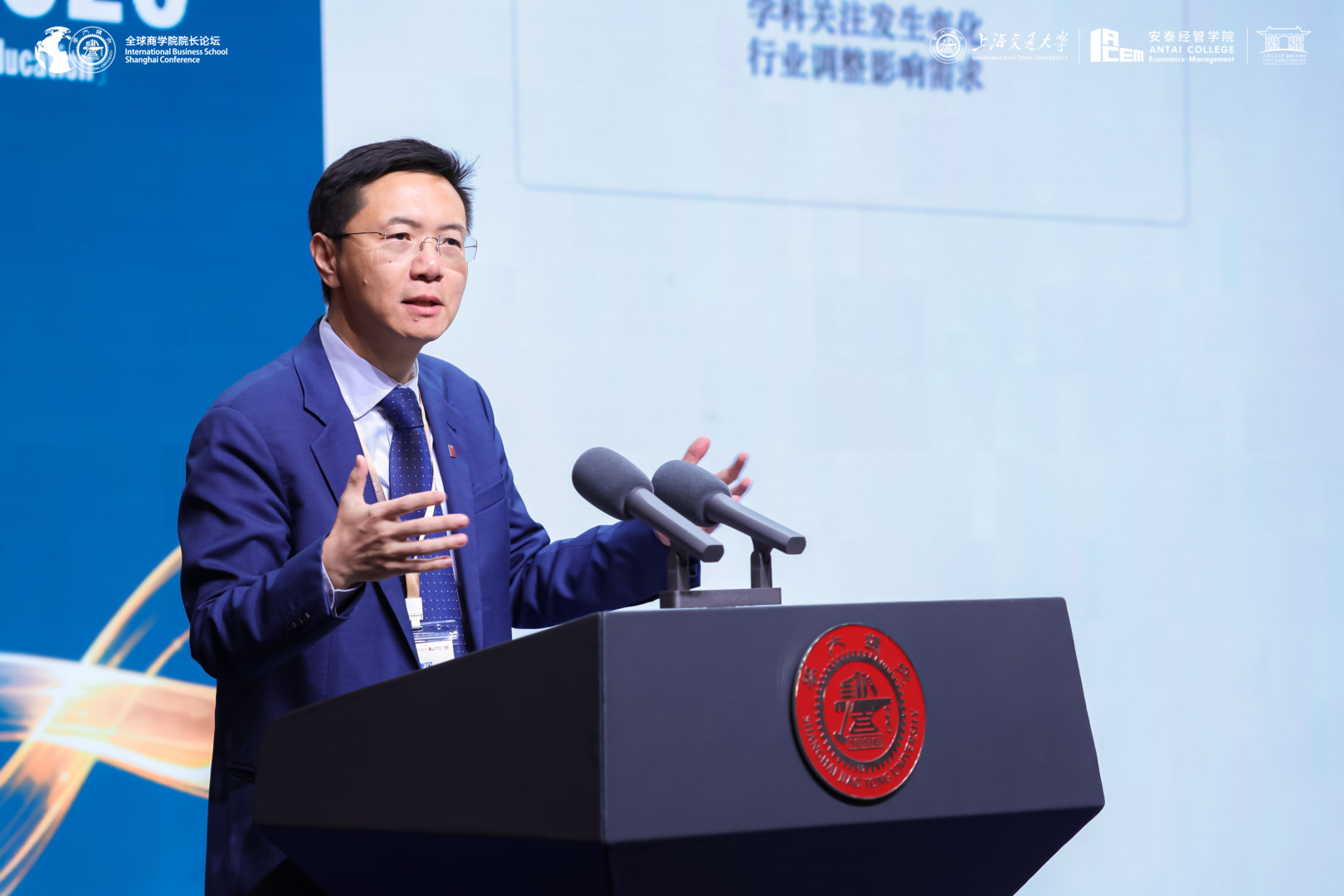
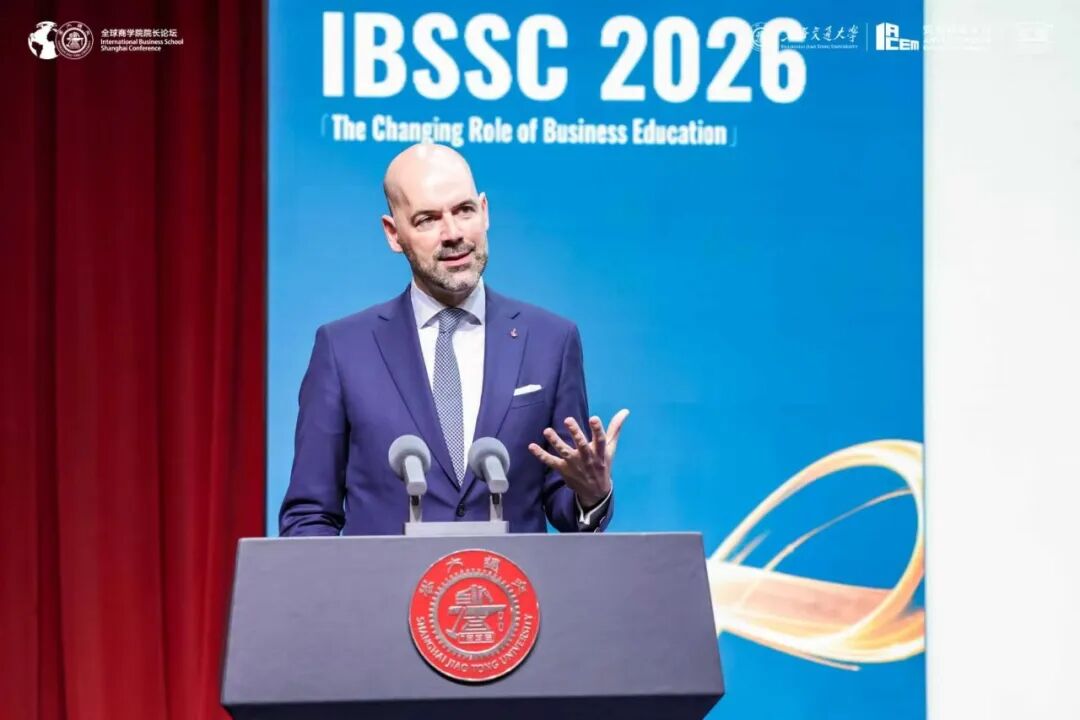
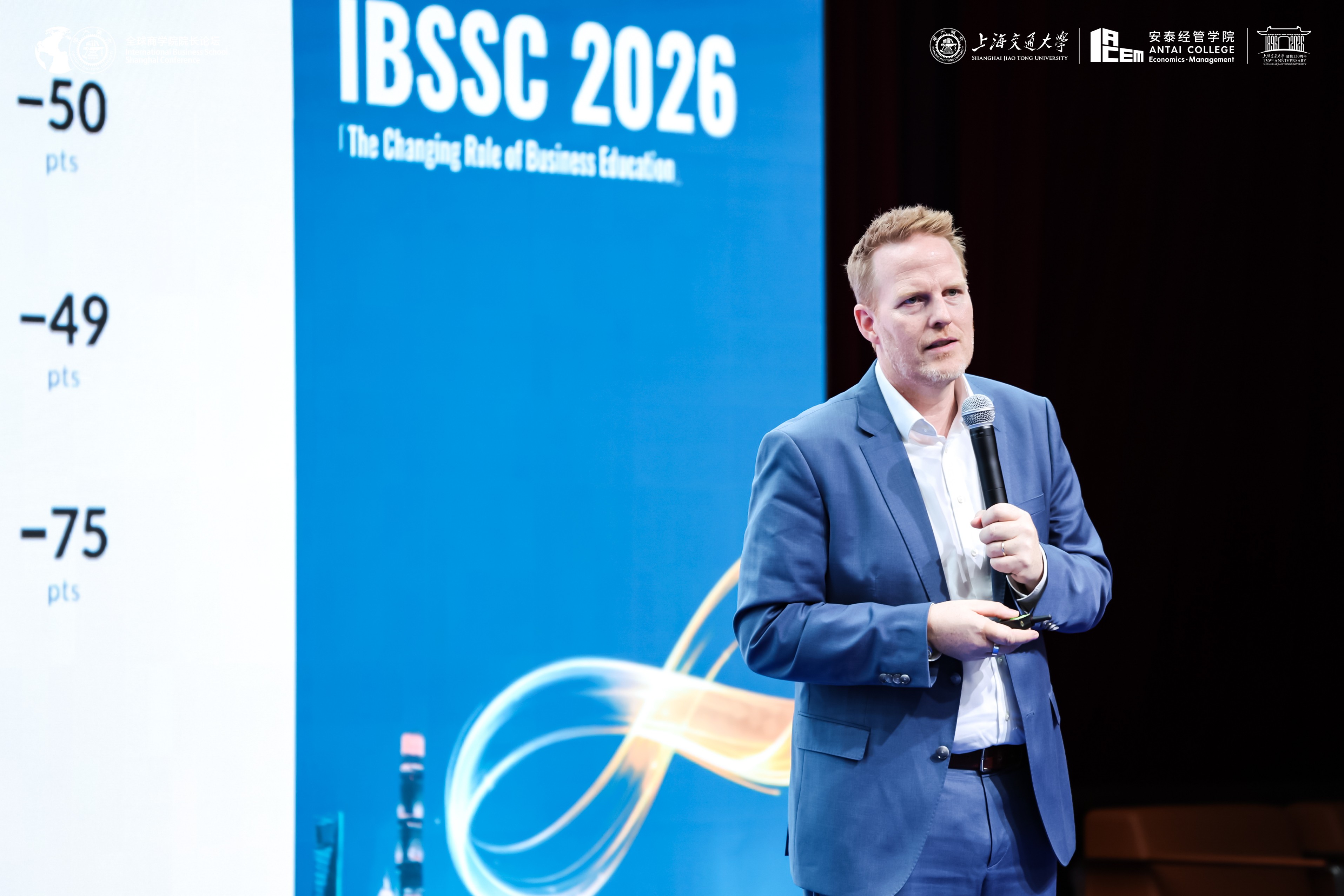 Keynote addresses were delivered by Sarah A. Soule, Dean of Stanford Graduate School of Business; Jun Yang, Dean of Nanyang Business School, Nanyang Technological University; Xuan Tian, Dean of Guanghua School of Management, Peking University; Frederik Anseel, Dean of HKUST Business School; and David Bach, President of IMD (International Institute for Management Development). Together, they underscored a shared conviction: as AI dissolves the scarcity of knowledge, business schools must double down on what machines cannot replicate—human judgment, ethics and cross-cultural competence.
Roundtable Dialogues: Forging Cooperation in a Fragmented World
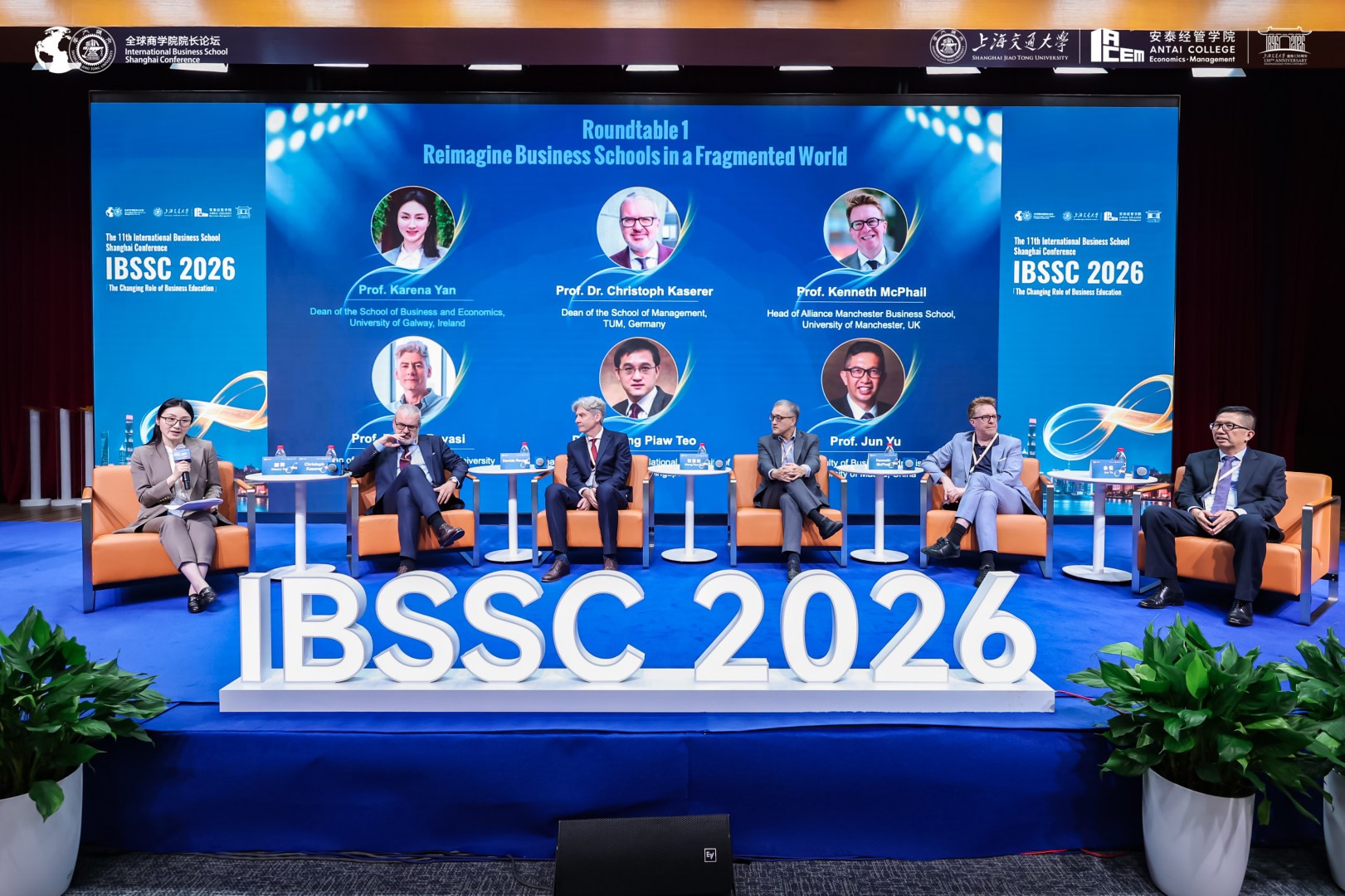
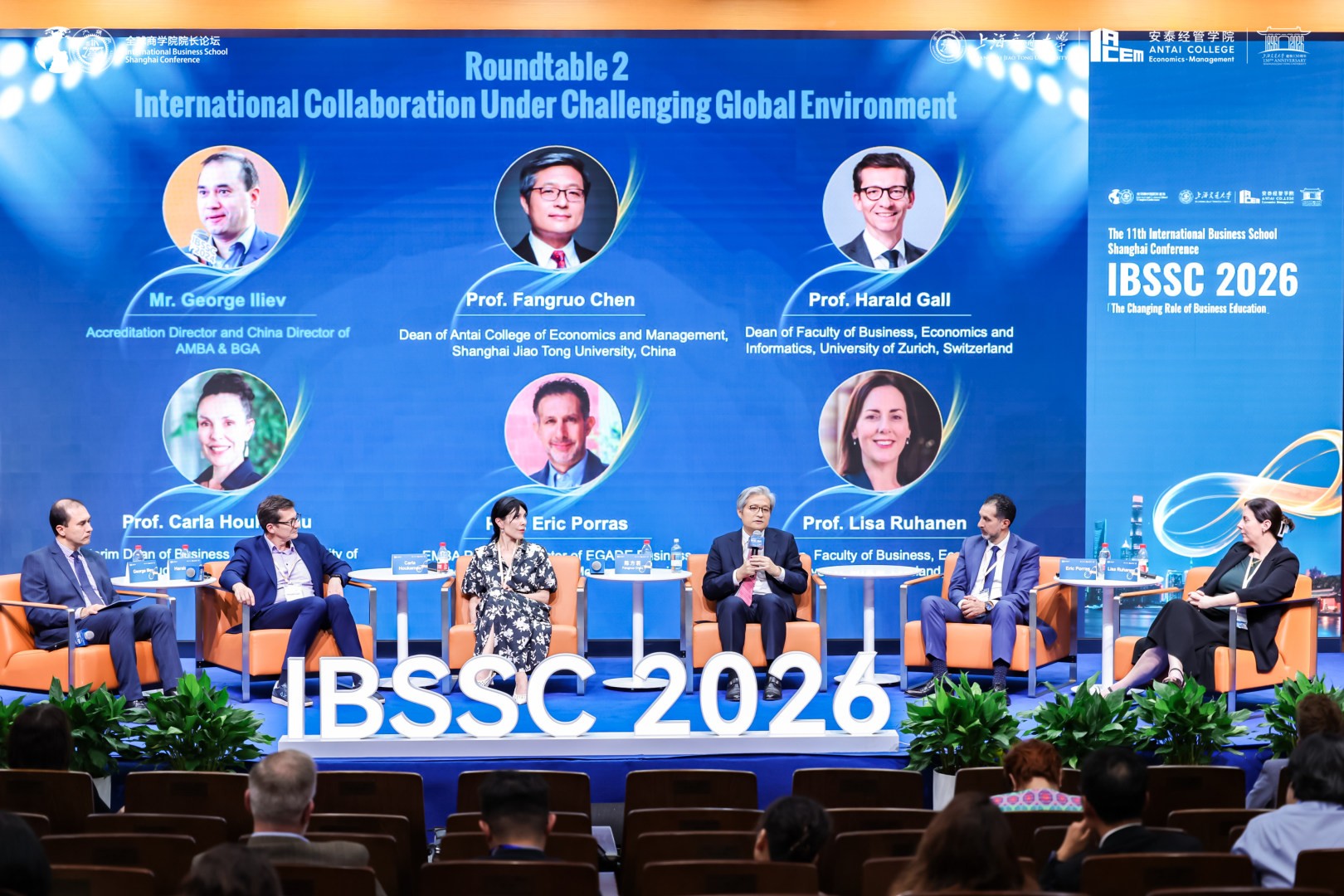
Two roundtable dialogues anchored the conference's intellectual exchange. The first, themed "Reimagining Business Schools in a Fragmented World" and moderated by Prof. Karena Yan, School of Business and Economics, University of Galway, Ireland, brought together deans to examine how business schools can reposition themselves—rethinking institutional positioning, reforming research evaluation, advancing interdisciplinary reform and cultivating students' global competence—while pursuing multi-regional collaboration and strengthening organizational resilience in staying true to their educational mission. The second, a dedicated roundtable of the U21 network, was moderated by George Iliev, International Director and China Director of AMBA & BGA. Member institutions agreed that the network should move beyond formal alliances, prioritizing pragmatic, small-scale collaborations that grow organically, respecting each member's distinctive strengths and development aspirations, and avoiding the governance burden of over-expansion.
U21 Business School Network for Societal Impact Launched
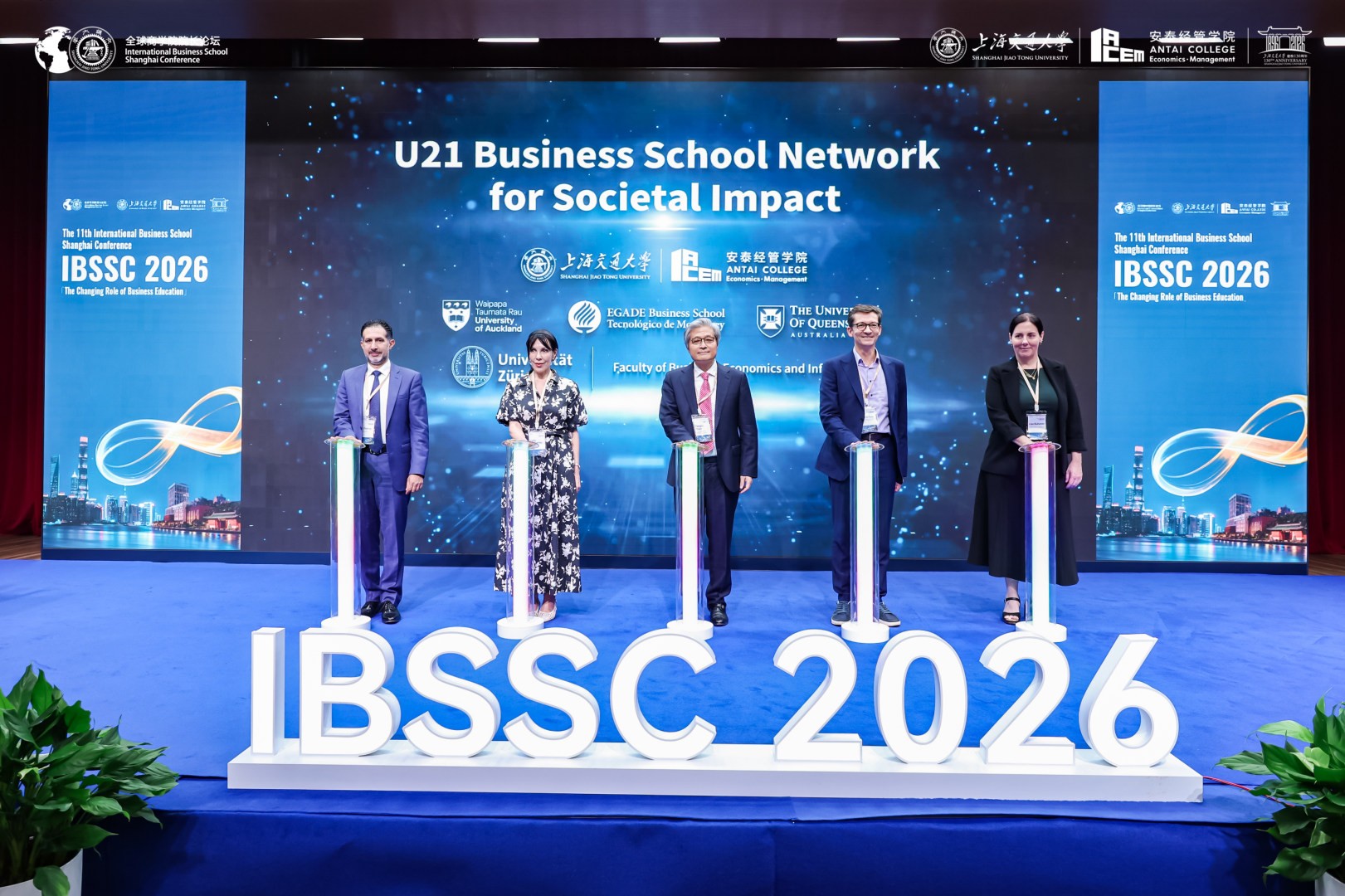 A landmark outcome of the conference was the official launch of the U21 Business School Network for Societal Impact. Building on the framework of Universitas 21, the network was initiated by Antai College together with the University of Zurich, the University of Auckland, Tecnológico de Monterrey and the University of Queensland. Spanning Asia, Europe, Oceania and North America, it will advance cross-border collaboration in education, research and social service, moving global business education cooperation from dialogue toward institutionalized partnership.
CEO Forum: Pioneers of Hard-Tech Innovation
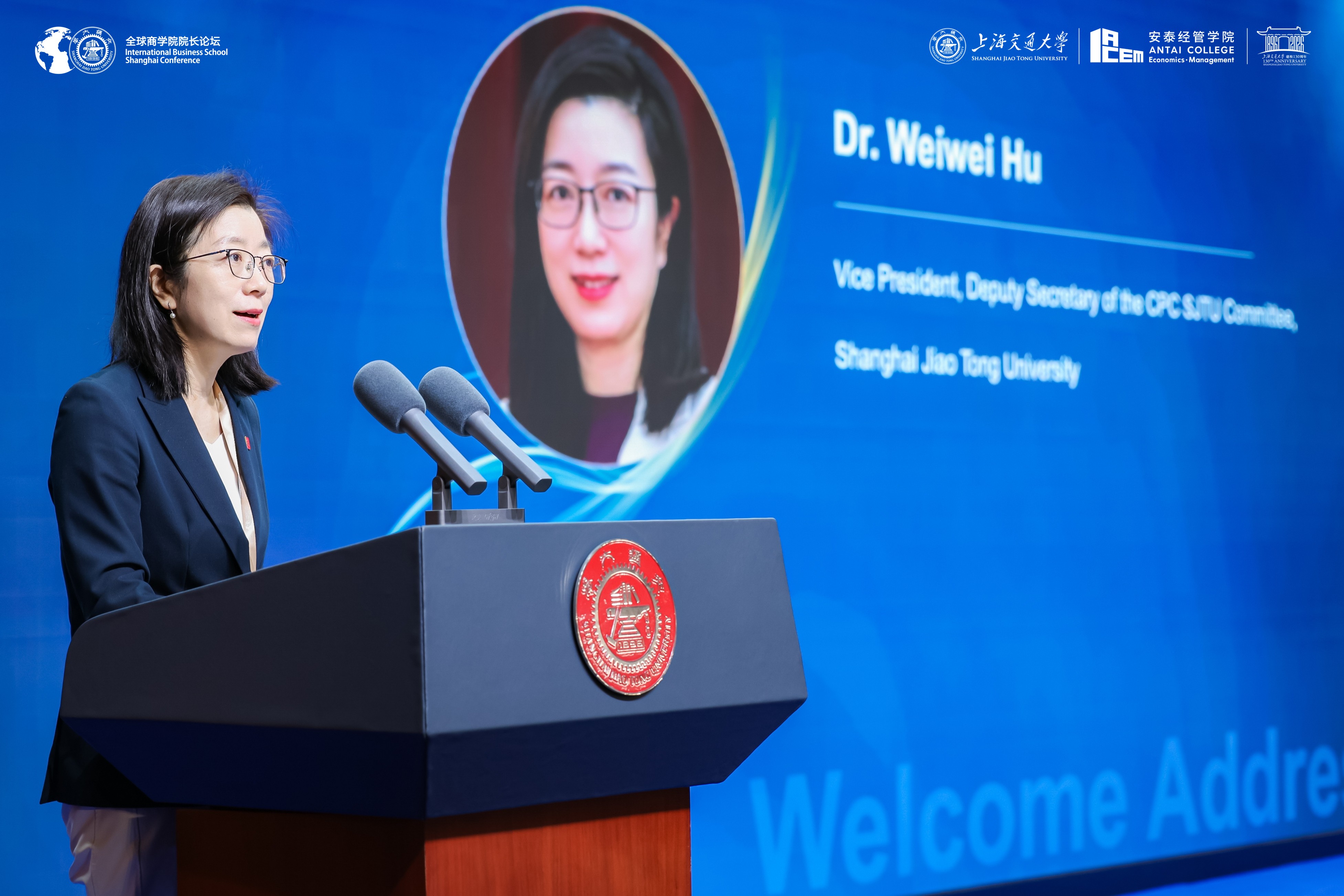 At the CEO Forum, Weiwei Hu, Vice President of Shanghai Jiao Tong University, delivered remarks, highlighting Antai's role as a leading force in China's business education reform. On the occasion of SJTU's 130th anniversary, she said, the College had released the Antai Declaration on Cultivating Business Talent in the AI Era and launched a series of industry-academia integration initiatives. Looking ahead, she expressed the hope that Antai would continue to build bridges connecting knowledge and industry, deepen industry-academia-research collaboration, and explore pragmatic pathways for business education in a changing world.
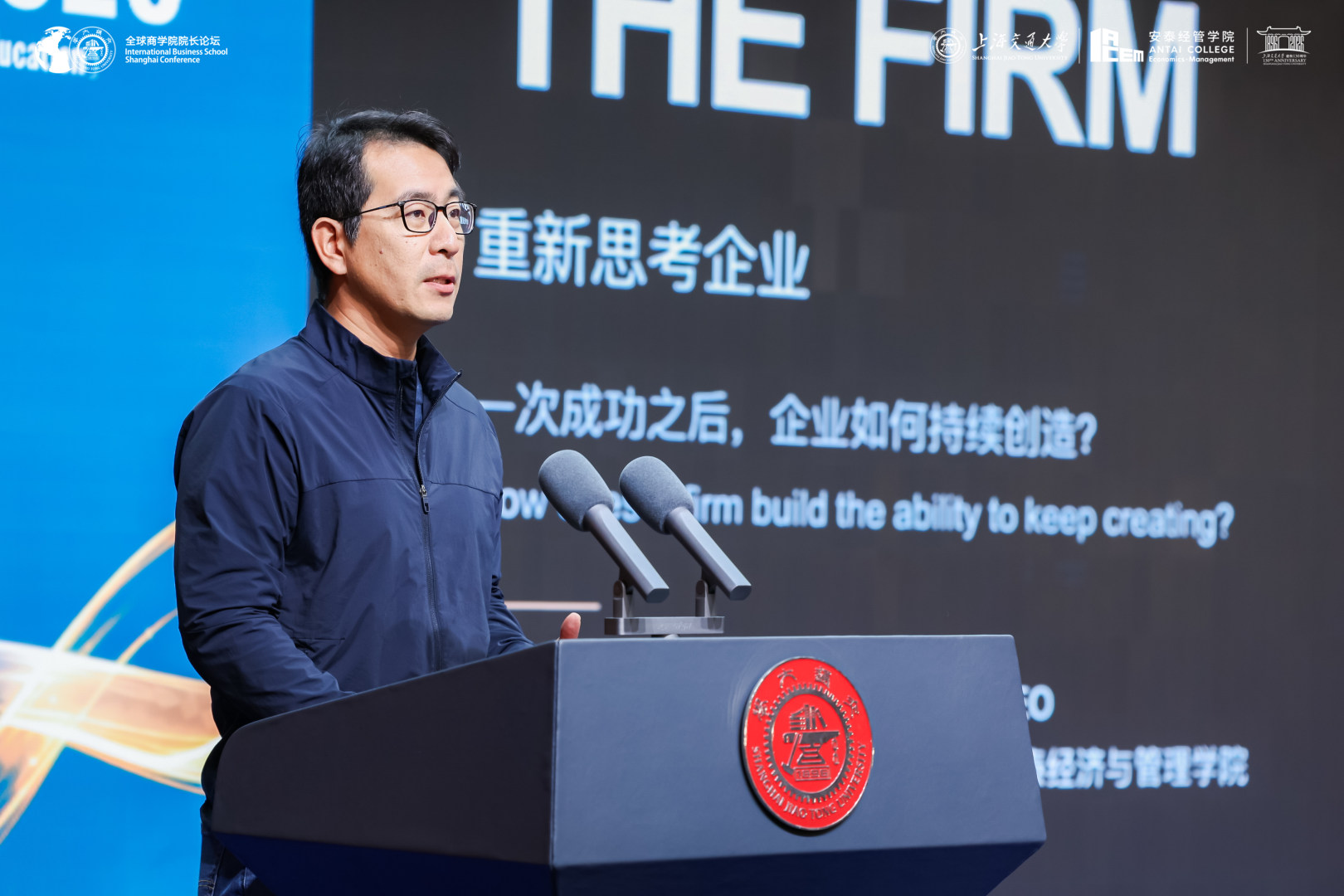
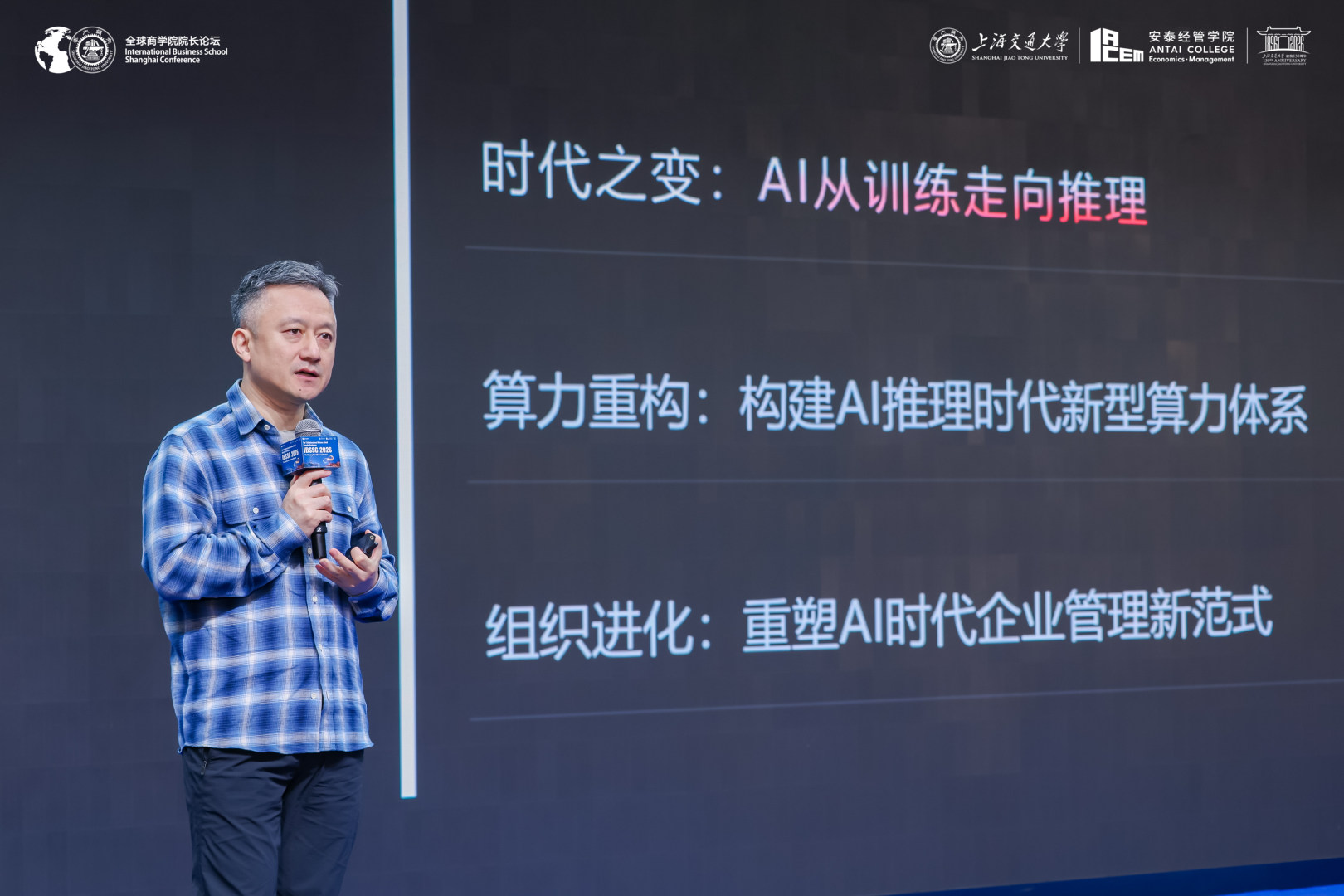
Changwu Zhang, Founder, Chairman and CEO of LandSpace, and Ning Chen, Founder, Chairman and CEO of Intellifusion, took the stage to share first-hand journeys in commercial spaceflight and AI computing, addressing the organizational governance, talent development and commercialization challenges of hard-tech ventures, and offering fresh industry perspectives on cultivating business talent in the AI era.
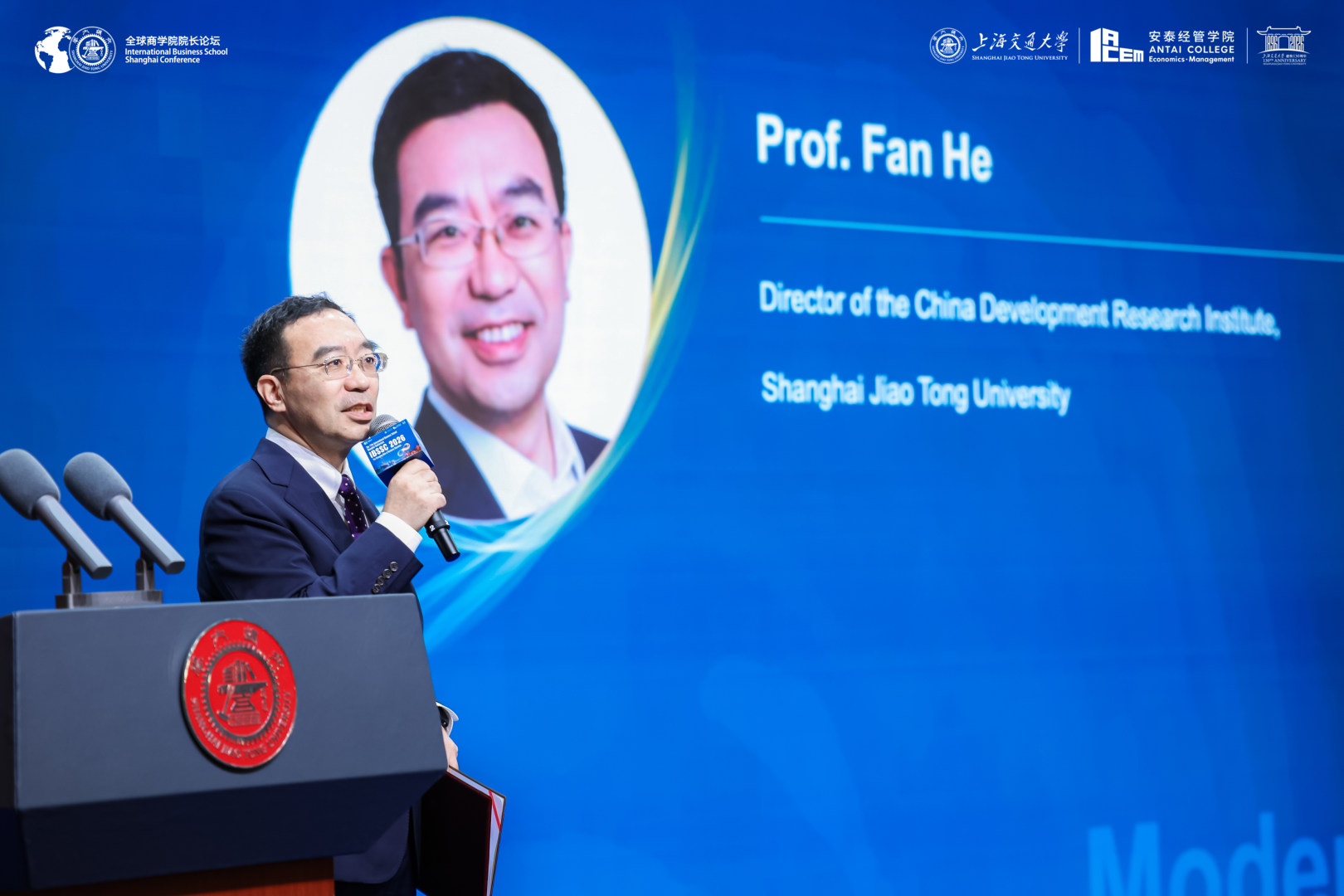 The forum was moderated by Prof. Fan He, Director of the China Development Research Institute.
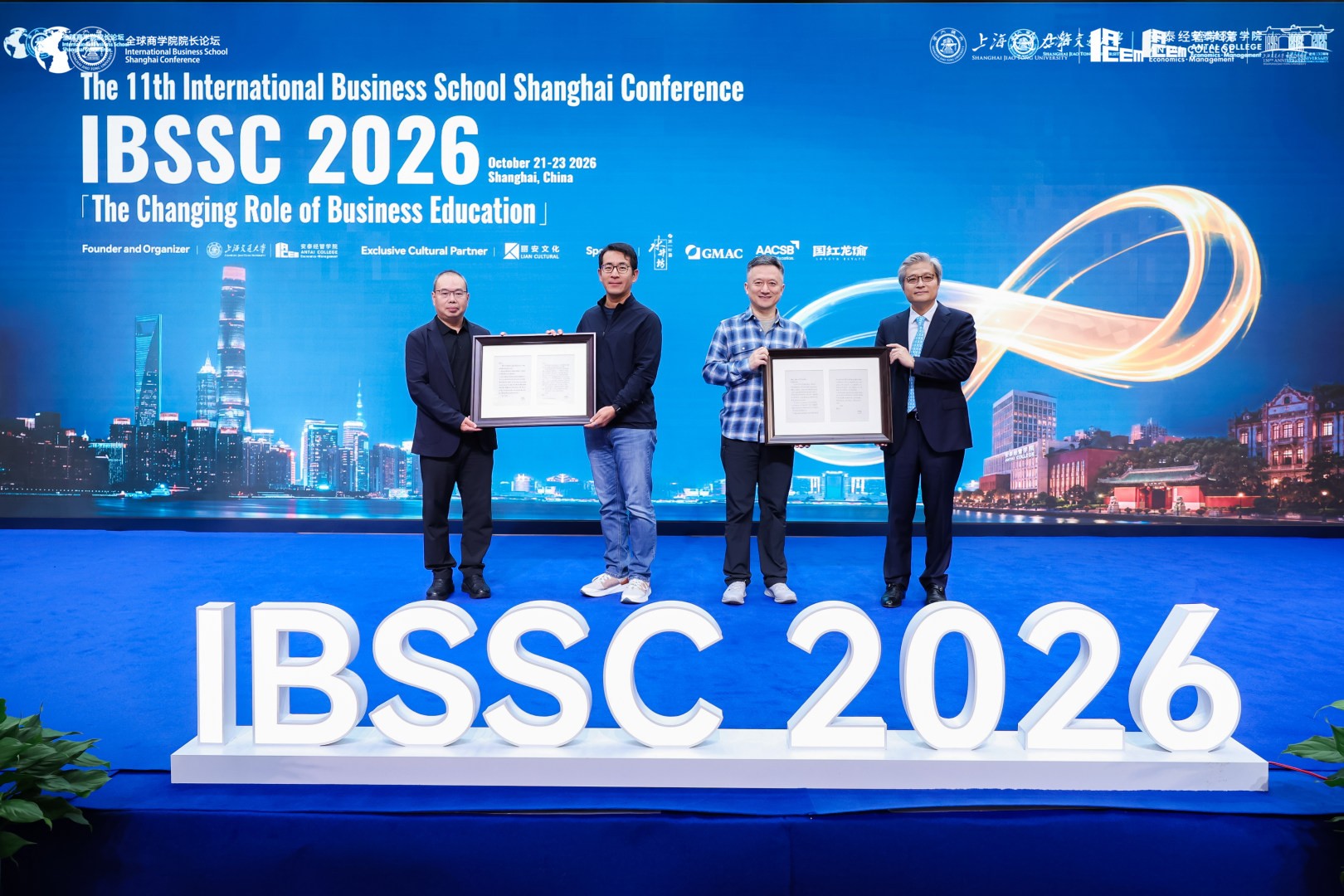
In a special tribute, Yong Zhang, Executive Director of the Qian Xuesen Library, together with Prof. Fangruo Chen, presented replicas of two precious manuscripts by Qian Xuesen to the two entrepreneurs. The manuscripts—a 1992–1993 letter on reusable launch vehicles and a 1984 letter on artificial intelligence and intelligent machines—echoed the two founders' pioneering paths, completing a cross-generational relay of scientific spirit.
Journal Symposium: Fostering an Ecosystem of Scholarship
A journal symposium, themed "Academic Publishing in an Era of Change," was held during the conference, moderated by Prof. Guohua Wan, with Prof. Qinghua Zhu, Vice Dean of Antai College, in attendance. Editors-in-chief of business journals, research administrators and scholars discussed how AI is reshaping scholarly writing and peer review, mounting editorial workloads, the proactive management of academic risks, the international voice of Chinese English-language business journals, and long-term collaboration mechanisms between business schools and academic journals. They reached a consensus on the joint responsibility of journals and business schools in upholding academic ethics, ensuring human oversight of AI-assisted workflows, and building an open, mutually reinforcing ecosystem for business scholarship.
Cultural Experience: Tracing the Origin of Shanghai Culture
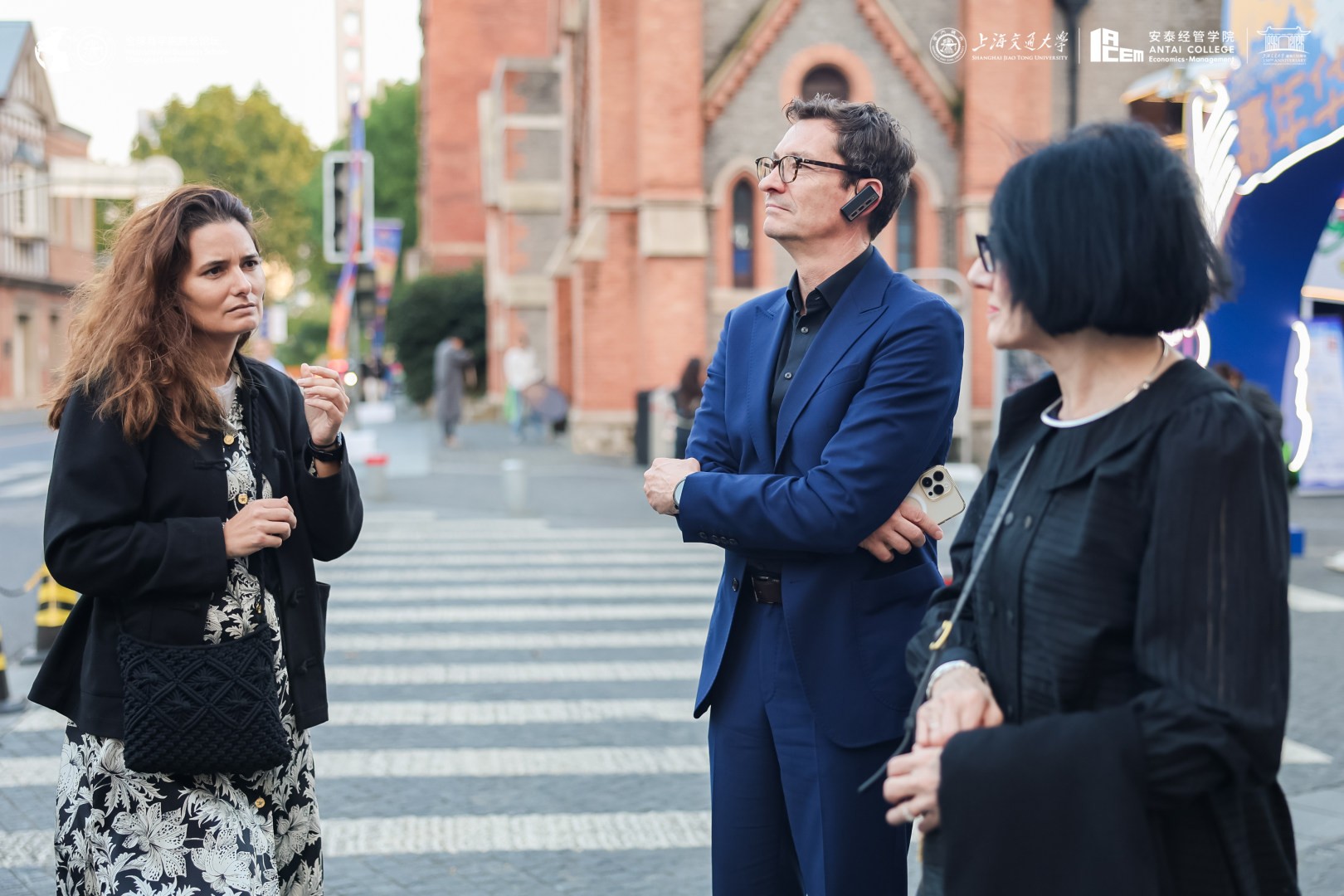 The conference designated LIAN Cultural—a renowned Shanghai cultural brand—as its exclusive cultural strategic partner, infusing the forum with distinctive artistic highlights. On October 21, guests explored Rockbund, the cradle of Shanghai's modern civilization, tracing the city's heritage through its century-old architecture designed by masters including László Hudec and Poy Gum Lee, and experiencing the spirit of Shanghai—inclusiveness, the pursuit of excellence, openness and humility—an ethos highly consistent with the conference's commitment to open exchange and global connectivity.
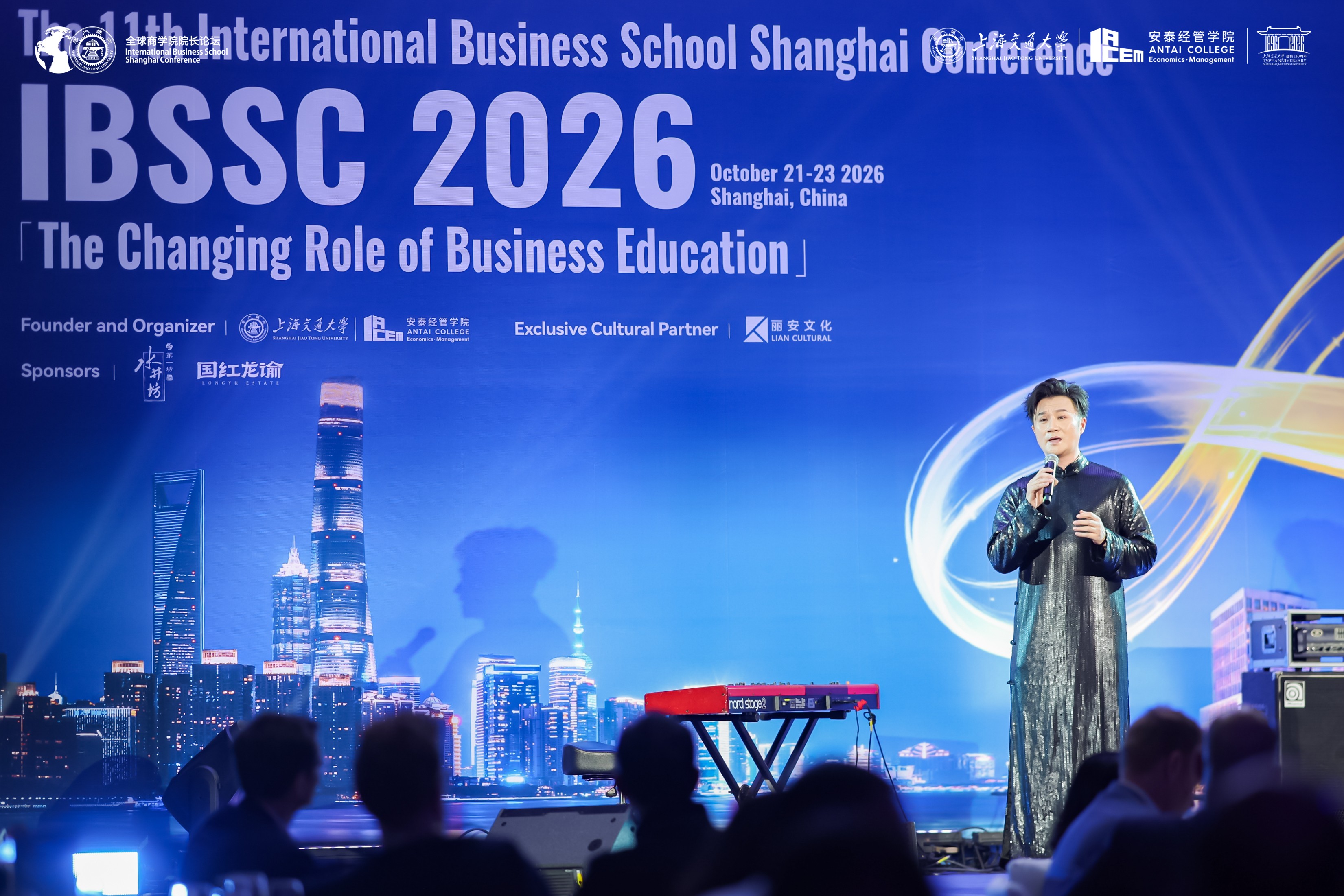
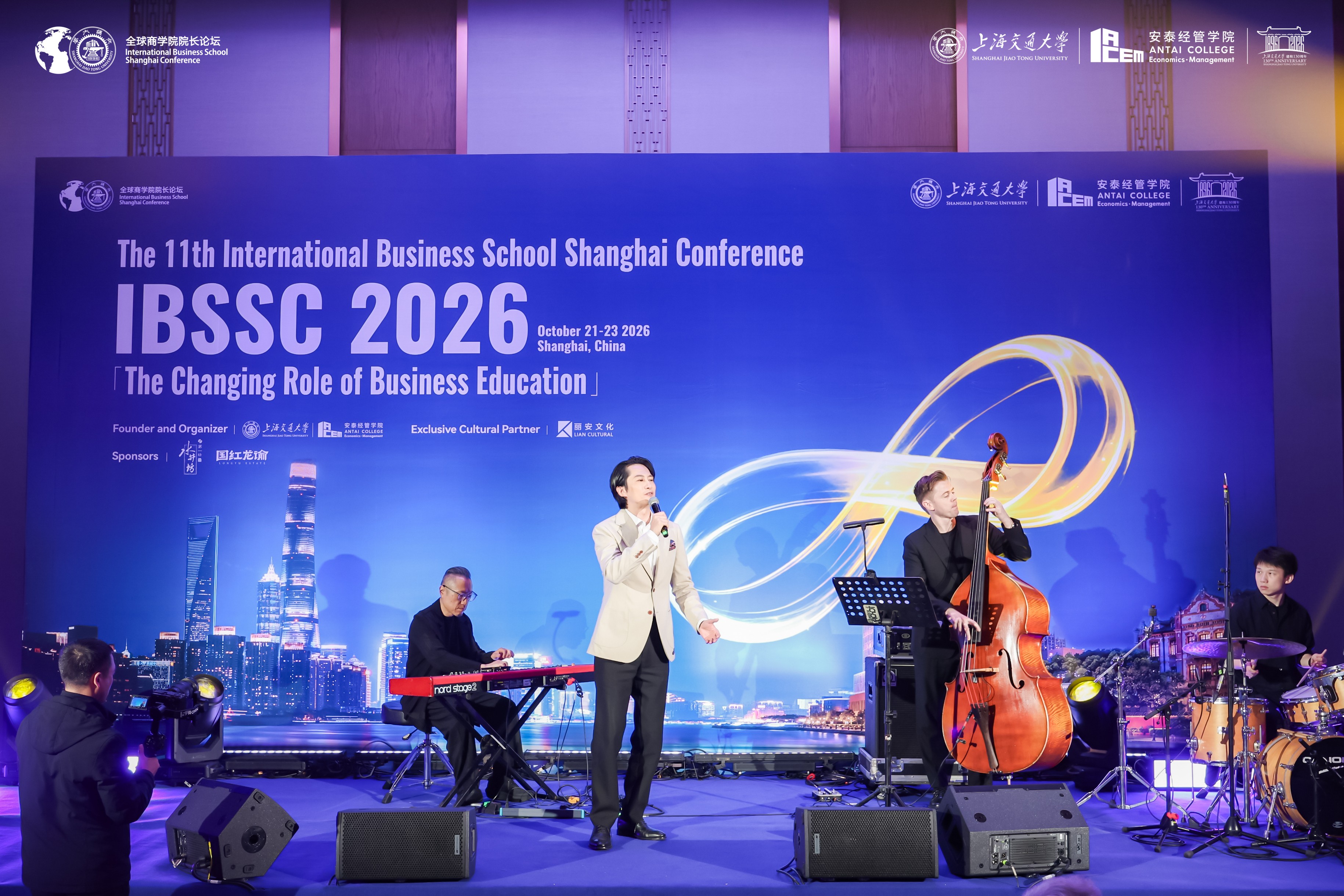
Chinese and Western artistic performances unfolded in turn, resonating Eastern elegance with contemporary creativity and immersing international guests in the distinctive charm of Shanghai culture.
Closing: Continuing the Dialogue
At the closing ceremony, Prof. Fangruo Chen delivered the closing address. Reviewing the conference's intellectual exchanges and frontier innovation practices, he noted that the forum had vividly presented both the opportunities of integrated innovation and the pressing questions of our time. Amid de-globalization, a fragmenting world order and the sweeping wave of AI, he said, international exchange among business schools holds unique advantages and should continue to serve as a platform of mutual learning. He expressed his hope that the consensus reached at this conference would translate into actionable cooperation, and invited global peers back to Shanghai in 2028 to write the next chapter of global business education cooperation.